


In therapy, I was asked to create something called an Evidence Sheet.
Two columns.
Structural.
Neuroplastic.
The assignment was simple: list the evidence for each.
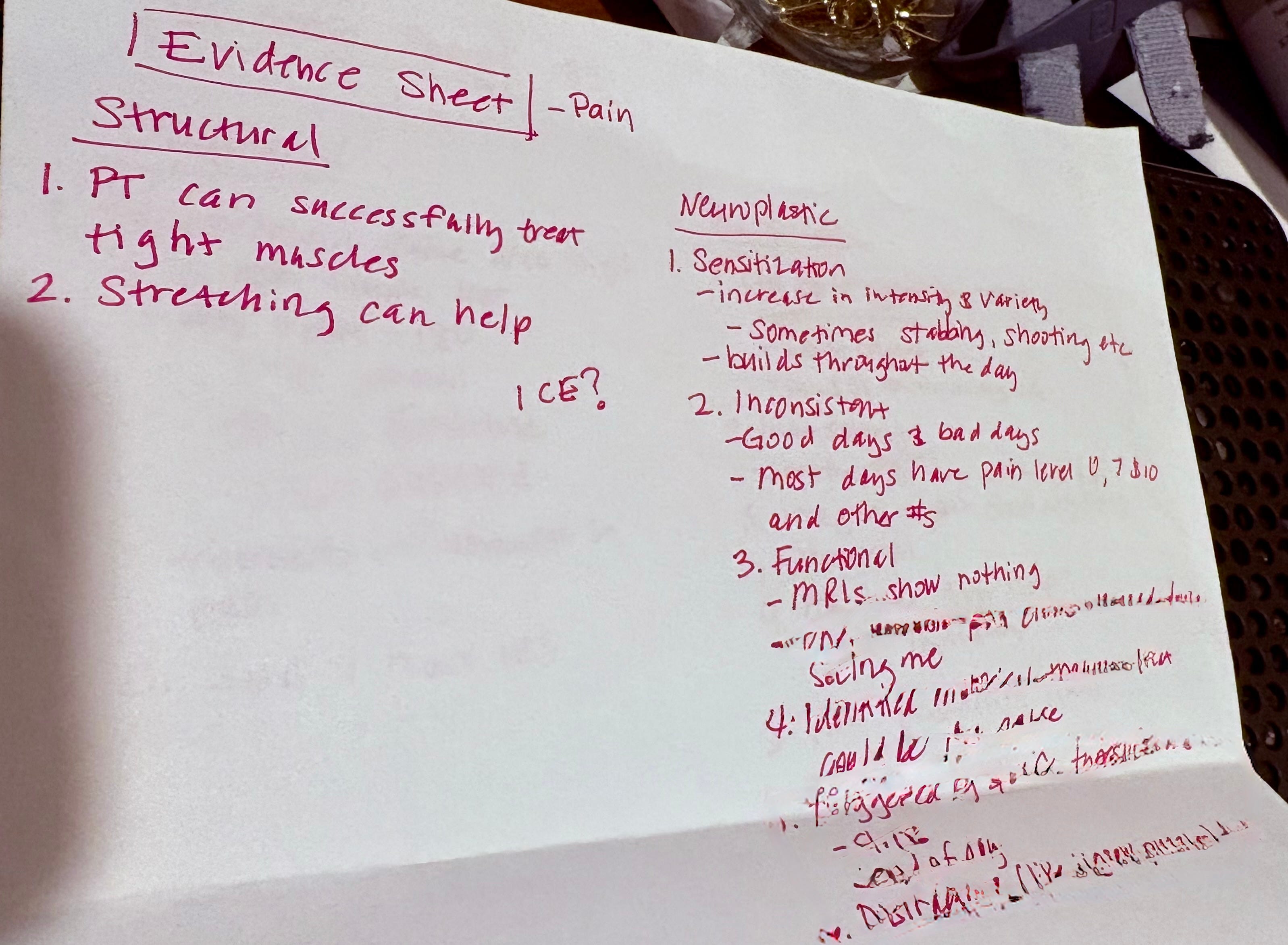
I assumed the Structural column would fill quickly. After all, I had been living with chronic pain for more than three years. Surely something was visibly broken.
But when I started writing, the column stayed surprisingly thin.
Pain that moved and had inconsistent patterns.
Pain that flared during stress.
Pain that intensified without new injury.
Those didn’t fit neatly under structural damage.
Two items refused to cooperate:
Physical therapy helps.
Ice helps.
But why?
Because of tissue healing?
Because movement calms the nervous system?
Because reduced fear reduces pain?
I couldn’t categorize them cleanly. That was the first crack in the story I had been telling myself.
Shocking New Knowledge
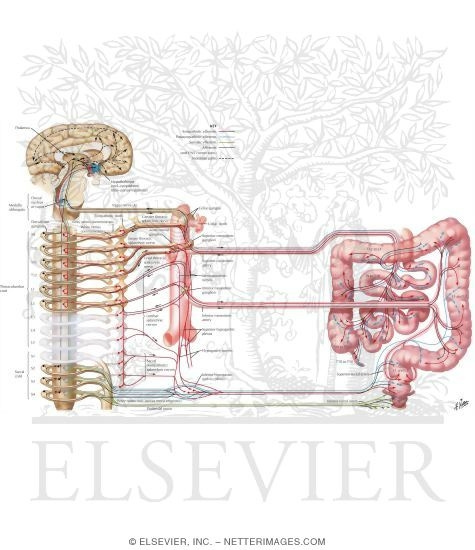
A few weeks later, I mentioned this framework to my physical therapist. During a side conversation, she explained something I had never been told before, not even by Mayo: I do have structural nerve involvement in my spine. Irritated nerves that wrap around and can trigger symptoms.
That information should have dismantled the neuroplastic hypothesis. Instead, it clarified it.
Structural vulnerability and nervous system amplification can coexist.
It felt strange to be learning something so powerful and so fundamental to my pain issue and to its solution so far into the 3+ year journey.
The nerves may be irritated. But a sensitized nervous system can magnify that signal far beyond its original threat level.
For the first time, my pain story felt more layered than broken. And layered meant leverage.
But is this pain real?
When I started reading about neuroplastic pain, one description finally made sense:
Chronic pain can involve a sensitized nervous system that continues generating real physical pain even when there isn’t ongoing tissue damage.
Not imagined pain.
Not exaggerated pain.
Not “it’s all in your head.”
Real pain, driven by a system that learned to stay in threat mode. For me, this didn’t replace the structural explanation.
It expanded it. The spinal nerves are irritated.
But my nervous system has been amplifying that signal for years.
Understanding that difference changed how I thought about everything.
Before I go any further, here’s what this does not mean:
It does not mean structural issues don’t exist.
It does not mean you should stop working with medical professionals.
It does not mean your pain is imagined or emotional.
It does not mean this applies to every chronic pain case.
It does mean the nervous system can become conditioned to produce pain long after the original trigger—and that conditioning can sometimes be interrupted.
Collecting Data About My Pain
That realization didn’t eliminate my pain. But it shifted my power.
I stopped assuming every flare meant something was getting worse. I started examining patterns instead of fearing them. I began treating symptoms as data, not destiny.
The first experiment I tried was simple:
Track what my pain did in response to stress, conflict, overstimulation or difficult emotions.
Don’t judge myself.
Observe.
This single exercise revealed more truth than three years of white-knuckling my way through symptoms.
Just When I Thought I Understood Everything Going On
As I tracked patterns, one signal showed up more than I expected: anger.
Not explosive anger.
Not obvious anger.
Suppressed anger.
The kind I learned to push down, smooth over or intellectualize.
The kind that never felt “productive,” so it never got expressed.
I could feel sad or disappointed or frustrated. But not angry. I didn’t realize how much emotional suppression keeps the nervous system on high alert. Or how a system stuck in threat mode can amplify pain.
This is where Emotional Awareness and Expression Therapy (EAET) entered the picture—not as a fix, but as a way to safely bring suppressed emotions into conscious awareness so the nervous system stops treating them like danger. I’ll go deeper into that in my next article.
For now, what mattered was this:
My pain wasn’t only physical.
It was also tied to what my body had been holding onto for years without my permission.
As I started connecting these pieces—structure, amplification, emotional suppression—something shifted.
Not dramatically.
Not overnight.
But enough to feel real.
My pain hasn’t vanished.
But it’s no longer running the entire show.
I’m starting to recognize when my nervous system is amplifying a signal that doesn’t match the actual threat. I’m beginning to feel moments of relief that once felt impossible. And I’m learning that curiosity reduces fear far more effectively than willpower ever did.

This is early progress, but it’s progress.
Driven by Self-Advocacy
Self-advocacy got me each step along the way to these new revelations:
Reading books
Talking about my learning with my care team
Being vulnerable in mind-body therapy work
Self-awareness
Don’t let the future of your pain sit in someone else’s hands.
I don’t expect my path to become anyone else’s. But if you’re living with chronic pain and your story feels incomplete, it may be worth examining the patterns beneath the symptoms.
Not to replace medical care.
To add another lens.
Because sometimes the first step toward reducing pain isn’t certainty. It’s the willingness to question the story you’ve been living with.
Sign up now to receive future newsletters directly in your inbox for free. Or upgrade to paid for more reader benefits.
Fantastic to hear you are getting clarity Julie - and a reminder that even the 'experts' (eg Mayo in your case, heart specialists in mine) don't have all the answers. It has taken me more than 30 years of doctor's visits, emergency room visits, wearing heart monitors, doing stress tests and angiograms to become aware that my heart beats in an irregular, violent fashion after I have excessive amounts of high salycilate foods over a 24 hour period. Starting with my much loved glass of white wine of an evening going right through to eating mints or having berries on my breakfast cereal. Also causes the skin on my hands to peel (when in personal grooming products such as certain liquid soaps) I had to work it all out for myself - it was an answer to prayer for sure. Keep searching Julie - sounds like you are on the road to resolution xx
You’re amazing, Julie.