


“Now pick up your heavier weights, step your left foot forward, your right foot back, position on your right toes and start to lunge.”
After about the third lunge, I felt a twang in my left hamstring.
I’ll give you the outcome from that class shortly and how I even got to the point of trying it. To get there, read on for my recent journey of intentional self-advocacy.

It’s hard to measure progress when you’re always in pain. But if I sit back and consider some of the differences between now and a few months ago, I have made a fair amount of progress:
I can now walk down the stairs without holding onto the rail for dear life, always leading with the right foot.
I resumed taking walks around the block with my husband and the dogs.
It is easier for me to get in and out of bed.
How in the world did I suddenly make such progress?! The reality is that nothing about it was sudden. I worked hard, self-advocated, and didn't give in when it got tough. Here are three key actions I took:
1. Cast a Wide Net
After my disheartening visit at Pain Management, I sat in the nothingness for a short period of time. But my mind doesn’t stay still regardless. As I hit other doctors’ offices for follow-ups or routine visits, I asked for local doctor recommendations. The Chicagoland area has many astute medical facilities, some of which are still untapped for me.
Three doctors were recommended to me, with either a pelvic health or pain focus, at three different medical institutions. I started with the two that had closer drives and felt like better fits.
Doctor #1 - Lots of Prerequisites
The first doctor, from a reputable pain clinic, had many requirements before his office would discuss scheduling an appointment:
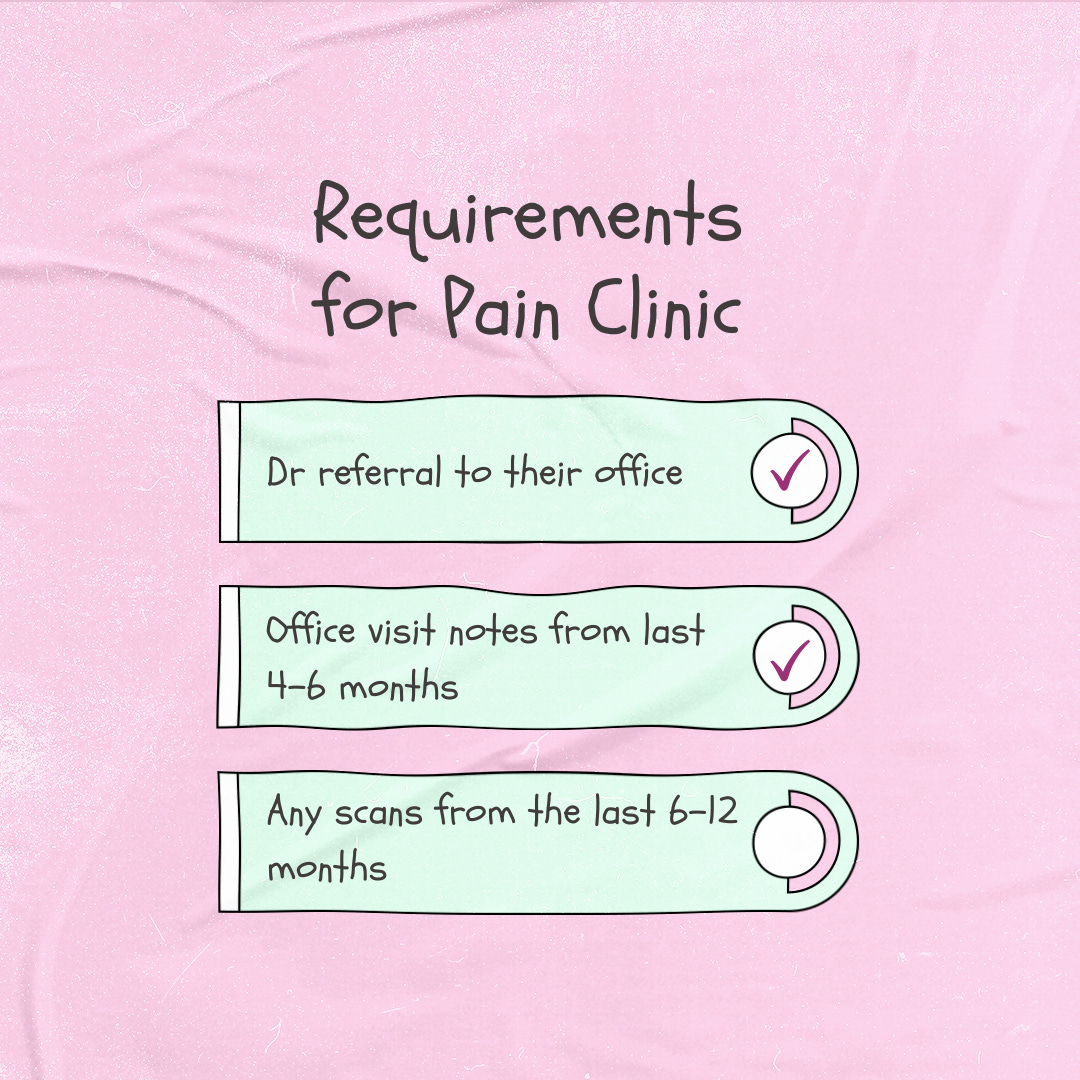
Getting the MRI scans from the Mayo Clinic was not easy. I got the runaround on the process to acquire these so it took longer than it should have.
Doctor #2 - Success!
In the meantime, I had an appointment with the second doctor at another reputable medical institution. This doctor was a delight.
She was pleasant, highly intelligent and was able to quickly discern where my current physical therapist was lacking. She and her team spent considerable time with me. My health background can be a bit complex to digest. She made a point of understanding it all (rather than keeping up with an unreasonable schedule) to make an informed recommendation.
I left her office, hours later, armed with two solid recommendations:
What would ultimately be a challenge back to my physical therapist.
A non-brain-intrusive way to help with pain at bedtime, which should a) ensure a better night’s sleep and b) improve how each day starts out after minimizing pain overnight.
Persistence paid off.
2. Ending a Relationship with a Toxic Team Member
What would you if your lumberjack told you he will only cut down the trees in the lot if he can reach them without moving from his current position? Personally, I would find another lumberjack. And that is exactly what I had to do with my pelvic floor physical therapist.
Author’s note: I am deliberately not going into specifics as the details are not for the average reader. If you are experiencing pelvic floor pain and would like to understand this nuance, feel free to message me and I will share the details separately.
When I questioned my physical therapist (PT) on the corners she was cutting, she did some fast talking, but underneath that, I heard her say she was unable to do exactly what the doctor ordered.
Nothin’ But the Best
I reached out to a previous pelvic floor PT, who is the best in her field. Initially, I passed on her as I did not want to drive 1 hour each way to see her at the new location where she works. This time, I Google-mapped her new location and discovered she is only 30 minutes away (not 1 hour). I was able to get in within the month.
I had to be decisive and hold my health needs to the highest standards.
3. Circling Back to the Mind-Body Connection
During my annual trip to a health and wellness resort in sunny Tucson, Arizona, I met again with the mental health and wellness director. I was reminded to pursue not only psychological solutions, but specifically mind-body solutions.
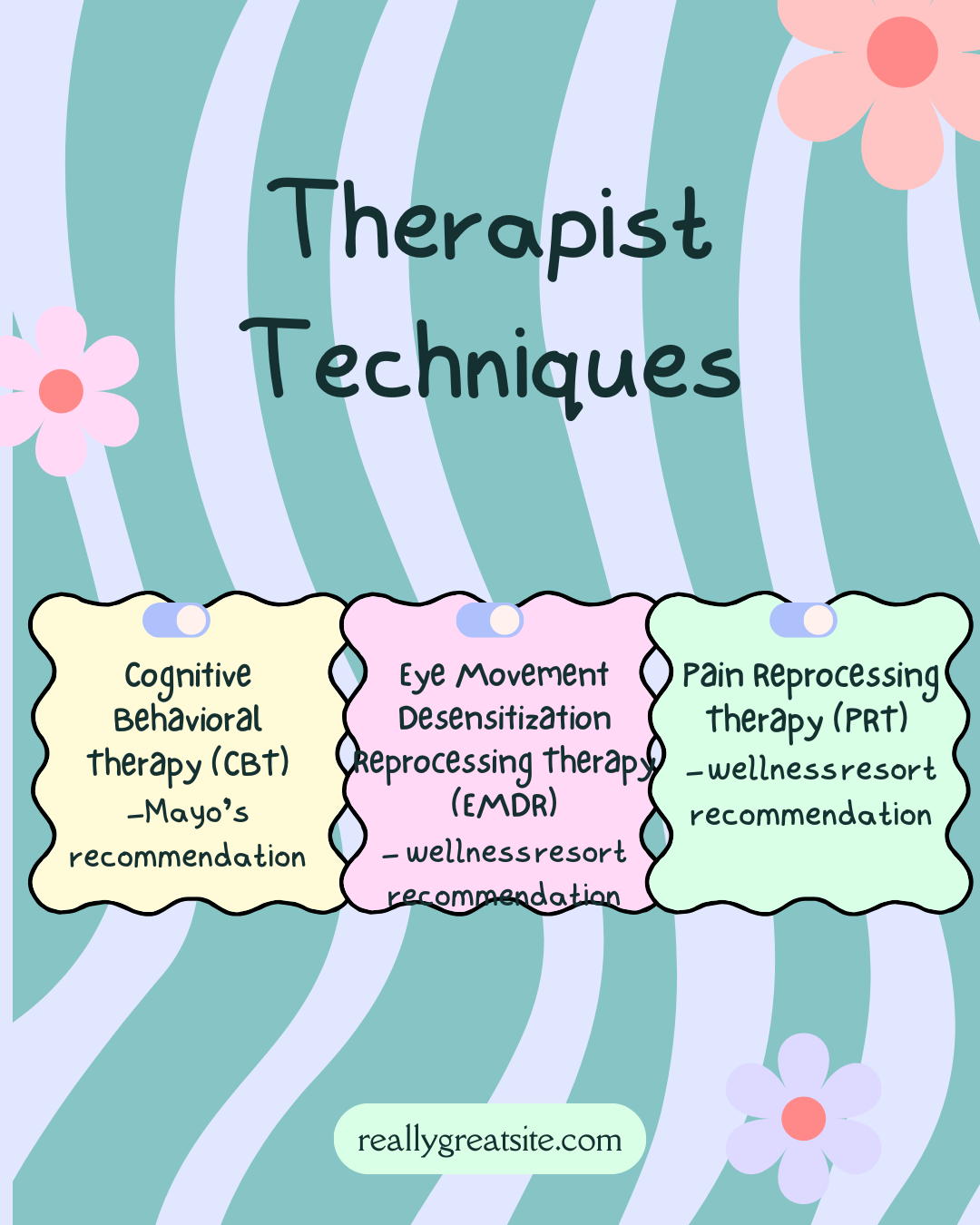
Last year, returning from the resort, I was convinced I needed to find a therapist who could do ALL three of the techniques recommended to me.
Honing in on PRT
This time, I picked one of the three therapies and found someone who does it well. After narrowing it down to EMDR or PRT, I listened to podcasts and read articles online. Although I feel EMDR could work for me as well, PRT feels like a better fit.
I consulted (remotely) with a center in Oregon known for its PRT approach. Initially, they had a waitlist, and as a consolation prize, they offered a 4-week, 1-hour a week small-group course to better understand PRT and get a jump-start.
As soon as I leaned into PRT as the solution, I started feeling better. I know that sounds a little woo-woo-ish, but if you’ve been sticking with me on this journey, you know that I’m only going to go with the real deal.
PRT is a neuroscience-based approach that trains the brain to reinterpret signals of danger as signals of safety. This is a targeted investment to improve my health and my daily quality of life.

Leveling Up on Gratitude
Thanks to finding PRT, I am overflowing with gratefulness, as the greatest day of gratitude in the year rolls in. My three things look like this:
For the moments in the day when I notice feeling a little better, I am grateful.
For being able to attend exercise classes at the gym, however easy I take it, I am grateful.
For potentially finding a longer-term solution for the pain, one that I can share with all of you, I am grateful.
Self-Advocacy is the Key
The common thread in all three of these key actions is self-advocacy. Before every doctor or PT visit, I create a list of questions so that, while I’m in there and when my head starts to swirl because they said something I didn’t expect, I always have my pre-planned question list to fall back on.
I pick up the phone and I make the calls I don’t want to make. I don’t want to call yet another new doctor’s office one. more. time. But I do it.
I ask many questions beyond the direct needs for my care. See the list of sample self-advocacy questions for medical visits here.
A doctor on his own plan
And that Doctor #1, who had all the prerequisites? Guess what? He declined to see me. I didn’t know doctors had that perogative, but I guess they do.
It was a good thing I had more options in the hopper, or that kind of news could have been devastating and temporarily showstopping. I got that news the day after I visited Doctor #2 and had a plan. Thank goodness. Still devastating, but not showstopping.
Don’t give up. The need to advocate for myself to ensure my healing journey continues to progress and has become imperative.
My hamstring is fine.
It was these three key actions that got me into that workout class after feeling better. I did temporarily hurt my hamstring, but it felt better in 2-3 days. I was not working out hard, but getting my body moving. Movement that my body misses. Minor injury aside, I felt great after this class and another class that week.
I’ll dive into PRT more in the next newsletter. Stay tuned.
Reflect on what’s improving, even if it’s tiny. That’s how momentum builds. What are you grateful for today? Feel free to share in the comments below.
Sign up now to receive future newsletters directly in your inbox for free. Or upgrade to paid for more reader benefits.
As a therapist looking to expand my skills, I'm interested in PRT! Drop a link, will you?
Yay you, Julie! Self-advocacy is key.